


Sea lanes are being disrupted. And an old Chinese frontier town is back in the spotlight
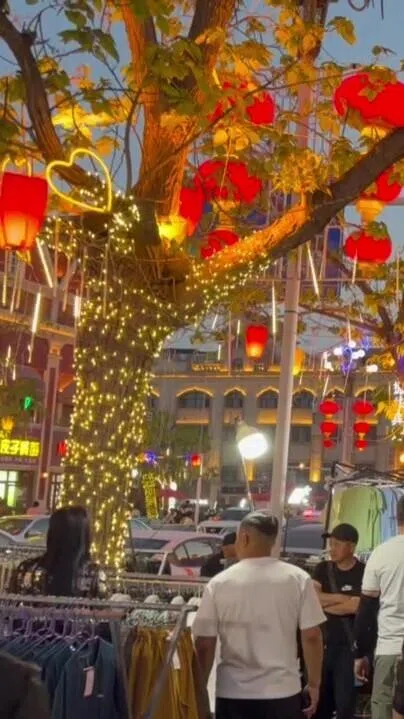
On Friendship Street in Khorgos, a night market hums with a relaxed air of activity.
A Uighur vendor mixing chipped ice with fresh yogurt, cheerfully assuring customers that the sugar he heaps on is not fattening.
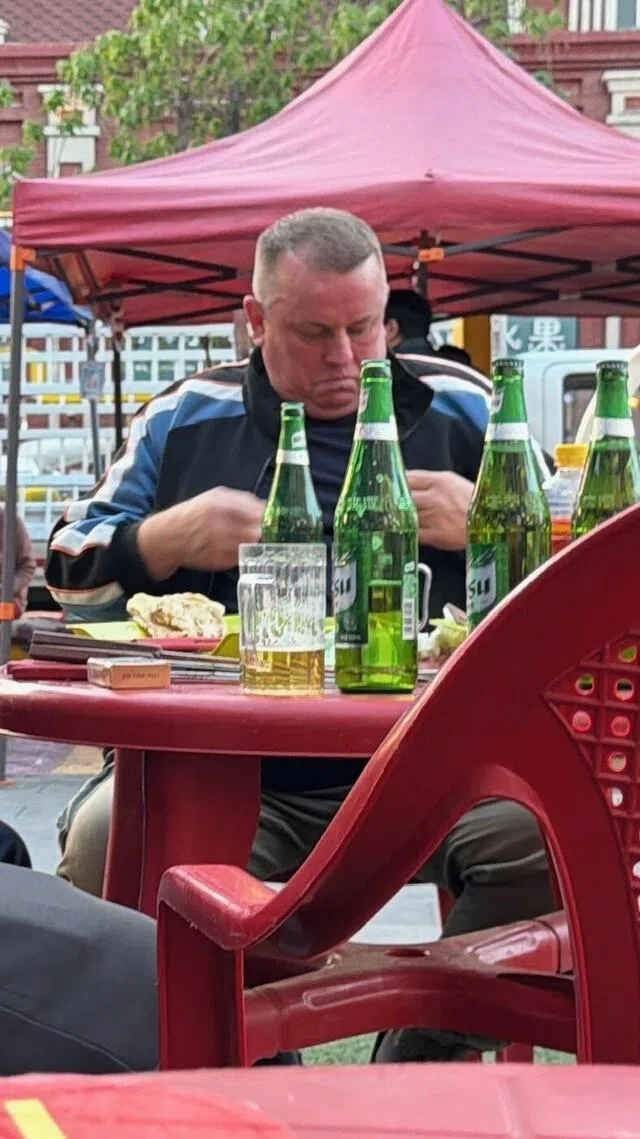
A few steps away, burly Kazakh long-haul drivers are lounging on low chairs on the pavement, unwinding over bottles of Xinjiang-brewed Wusu beer. One beckons this reporter over for a wefie.
In this remote frontier city in Xinjiang, across from Kazakhstan, the bustle continues after dark, driven by steady cross-border trade.
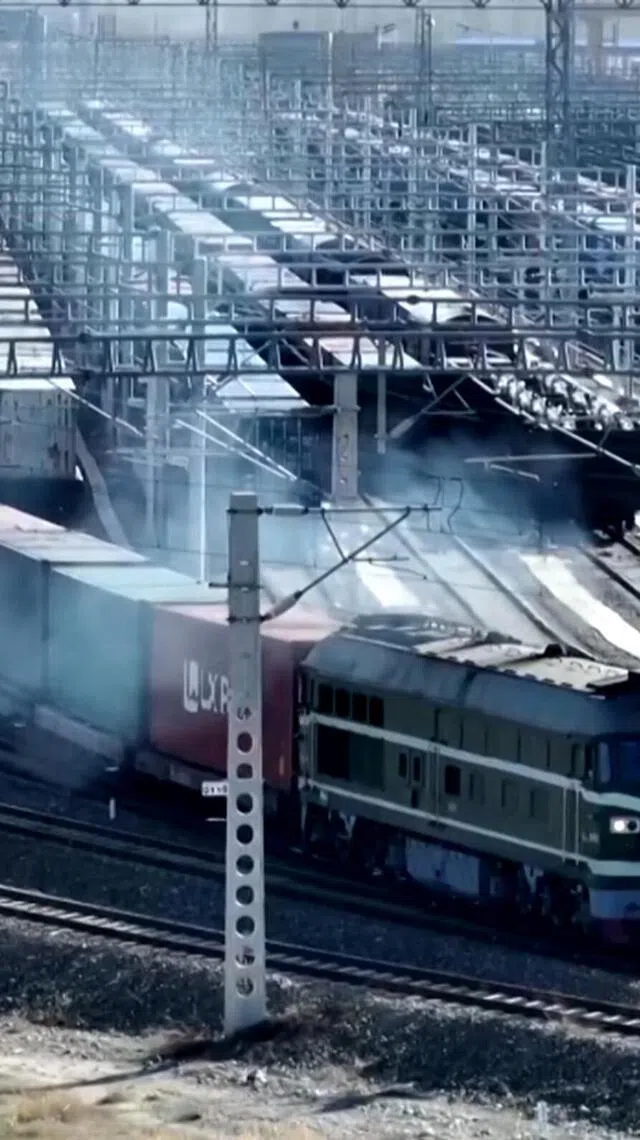
KHORGOS – At least one train now rumbles through Khorgos every hour, day and night – an echo of the camel bells that once rang along this stretch of the ancient Silk Road.
For it is a major node on the China-Europe Railway Express, the network of freight rail services linking factories in China to markets across Central Asia, Russia and Europe.
From here, rail lines fan out westwards, carrying everything from electronics and car parts to household appliances and e-commerce parcels.
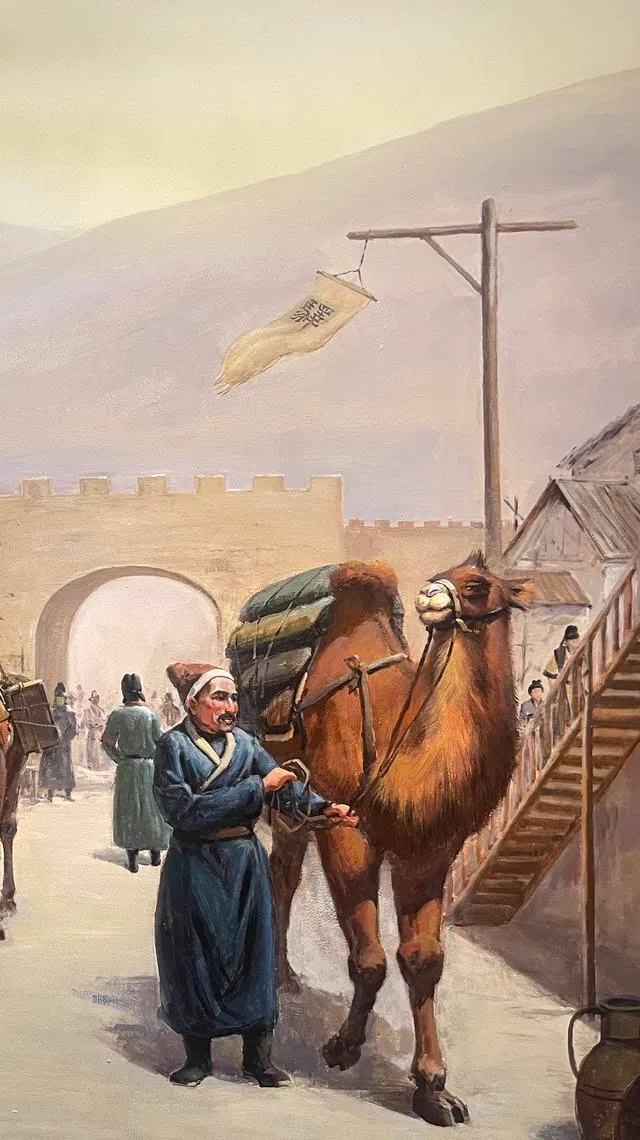
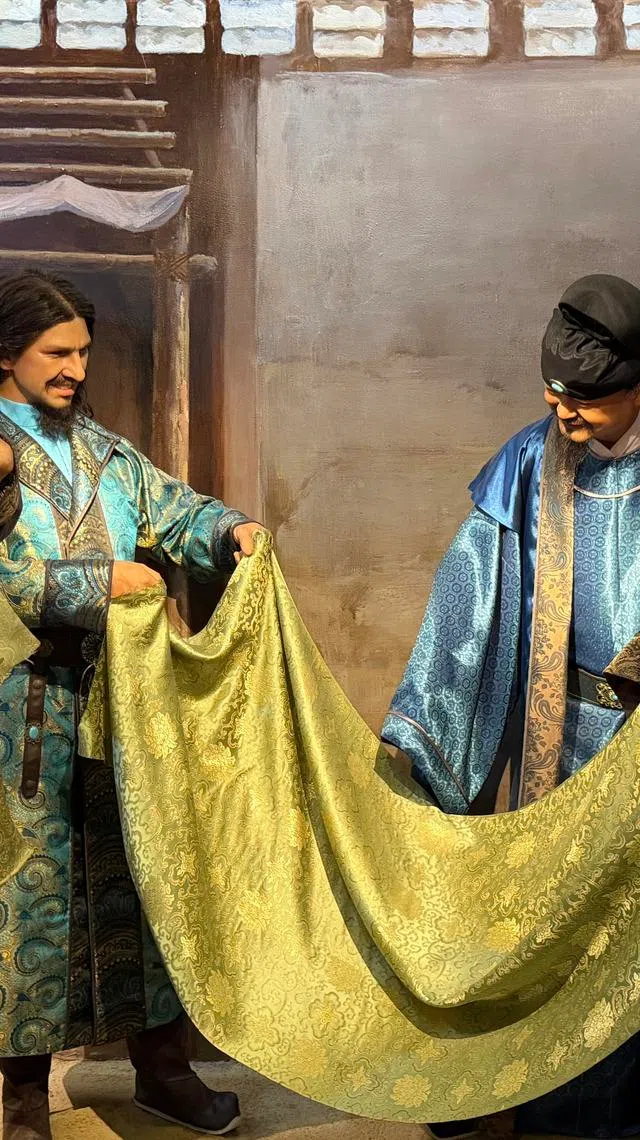
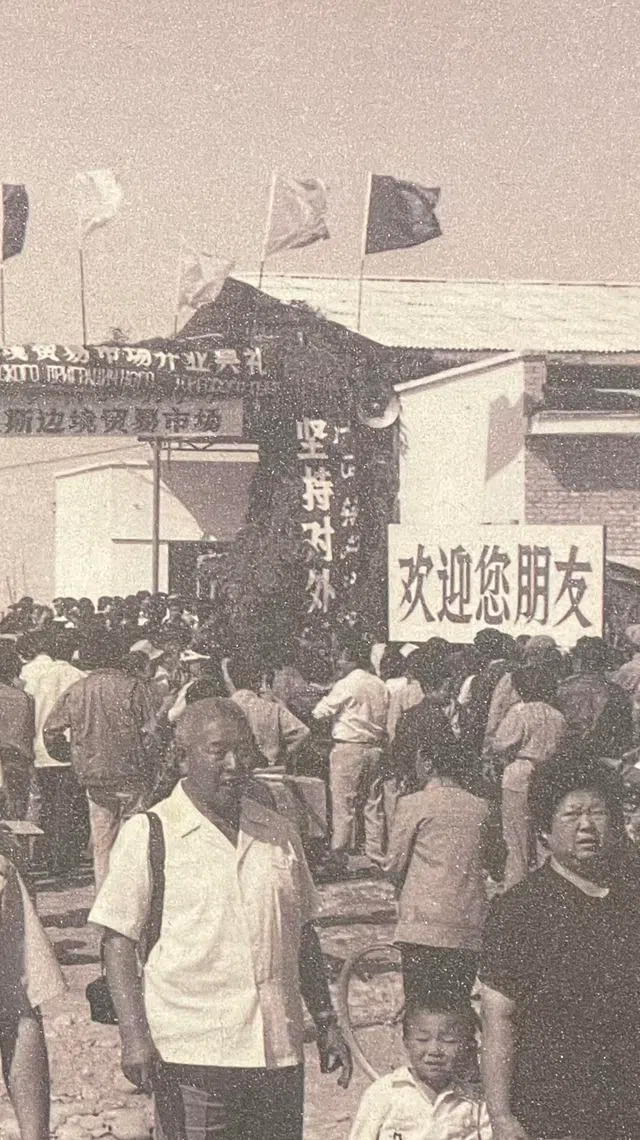
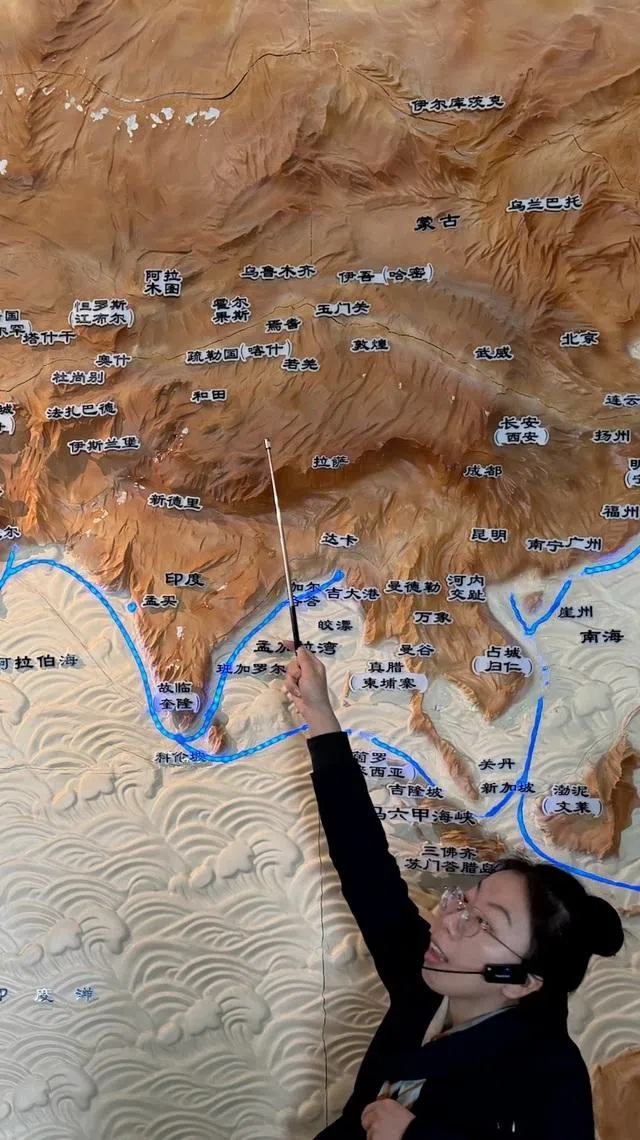
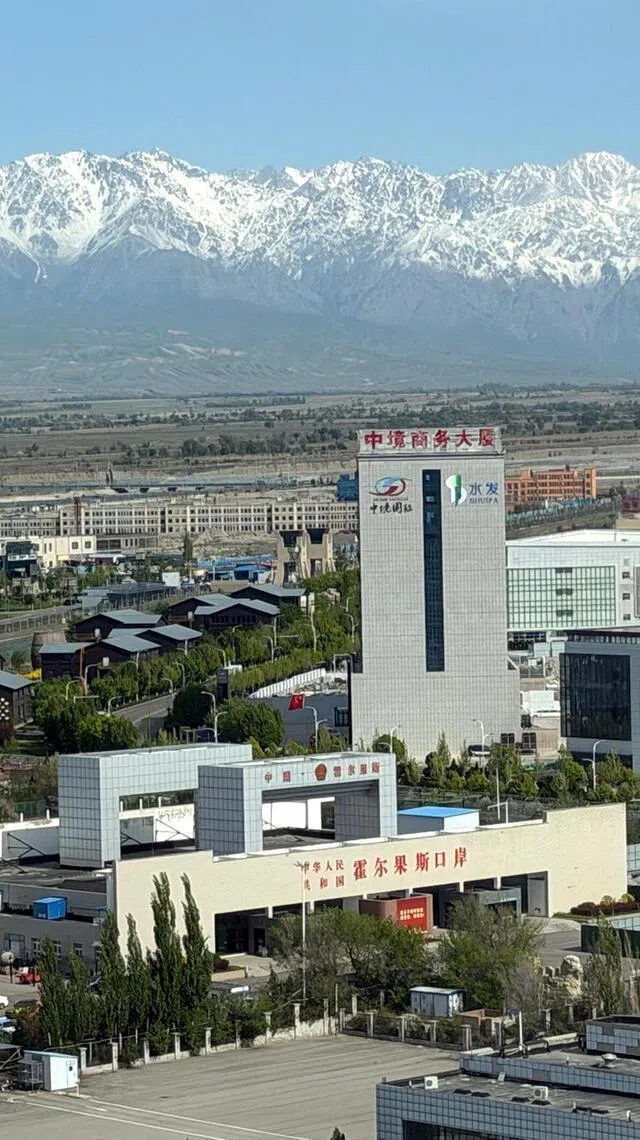
Khorgos is reprising its past role as an important Chinese outpost on caravan routes where traders moved between East and West.
Traders brought horses, carpets and glassware from Central Asia and beyond, and took with them porcelain, silk, bronze mirrors and paper – the products of ancient China coveted in the West.
Over time, those routes fell quiet. As China’s growth shifted eastward from the north-west, Khorgos faded into obscurity, trading only with neighbouring Kazakhstan on the edge of landlocked Central Asia.
That changed in 2013, when President Xi Jinping launched the Belt and Road Initiative, a sweeping plan to revive overland and maritime links (in blue) between China and the rest of the world.
This gave Khorgos a new lease of life, re-establishing it as a key overland gateway on China’s western frontier.
When shipping stalls, Khorgos moves
Growth was gradual at first. From the launch of regular China-Europe freight services in 2011, it took about 11 years to complete its first 50,000 trips. It then took less than three years to reach the next 50,000 trips in November 2024.
Disruptions at sea in recent years have accelerated that growth, as freight operators moved some cargo onto rail to avoid vulnerable maritime chokepoints.

The shift began in late 2023, after Yemen’s Houthi forces began attacking commercial ships in the Red Sea and the Bab el-Mandeb Strait.
Many vessels were forced to avoid the Suez Canal and reroute around the Cape of Good Hope, adding about 3,500 nautical miles to journeys between Asia and Europe. With the re-routing, a typical journey from Shanghai to Rotterdam that takes 28-32 days by ship through the Suez Canal now takes up to two weeks more, compared with 16 to 20 days by rail.
Longer routes meant more fuel burned and higher costs for operators.
From March 2026, it became a double whammy, as a near-blockade of the Strait of Hormuz – sparked by the US-Israel war against Iran that began on Feb 28 – curtailed Gulf oil flows and drove benchmark oil prices up by more than 10 per cent within days.
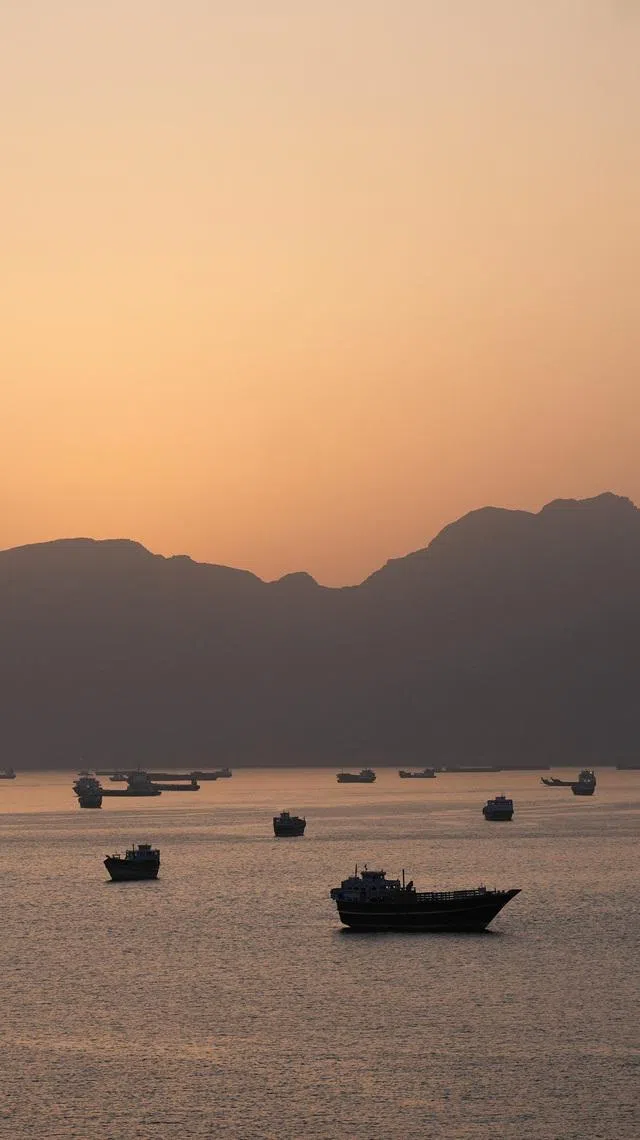
The Hormuz crisis also left hundreds of ships stranded or delayed in the strait, tying up capacity and leaving fewer vessels available to move goods.
Rail is usually more expensive than sea freight, but the gap narrows sharply when shipping costs surge due to geopolitical tensions.
“As sea routes become riskier and more costly, especially with higher oil prices, we see more freight between China and Europe moving to rail,” said Mr Dustin Woo, who runs HLT Int’l Logistics Ningbo, a logistics company that specialises in China-Europe Railway Express routes.
“Relatively speaking, rail no longer looks so expensive,” he told The Straits Times.
In the first quarter of 2026 alone – with March being when the Iran war was in full swing – China-Europe freight trains made 5,460 trips and carried 546,000 twenty-foot equivalent units of cargo, up 29 per cent and 22 per cent respectively from a year earlier, according to China State Railway Group.
More goods, new demand
The surge in rail traffic through Khorgos is driven not by sea lane disruption alone; it is also being pulled by new demand.
The Iran crisis has made the risks of fossil fuel dependence hard to ignore. That, together with existing climate targets, has boosted demand for electric vehicles, batteries and other renewable energy products – goods that Chinese factories already produce at scale and export via hubs such as Khorgos.
That shift is already visible on the ground.
“Soon after the Iran war broke out, we cleared all our stock of EVs and solar panels that had been piling up in warehouses in Europe and Africa because supply had previously outpaced demand,” said Mr Wang Dachao, who manages a freight forwarding operation in Khorgos.

Mr Wang Dachao standing with a fleet of cars waiting to be exported out of China.
ST PHOTO: YEW LUN TIAN
Analysts see this shift as a structural one that will persist.
“As Europe and other parts of the world move towards a green transition, demand for China’s renewable‑energy products will only increase,” said Professor Zhang Yan of the Shanghai University of Finance and Economics.
“This is a long-term trend that will outlast the short-term situation in Hormuz,” she told ST.
E-commerce is reinforcing the shift.
One in four European Union residents made at least one purchase in 2025 on Temu, a Chinese e-commerce platform. This shows the scale of European appetite for cheap, China-shipped goods ordered on a whim.
Online buyers increasingly expect their purchases to arrive quickly, with speed of delivery driving customer satisfaction and loyalty, and often influencing where people choose to shop.

At the Khorgos Railway Port transshipment yard on the Xinjiang side, cranes are busy shifting freight containers between standard-gauge Chinese trains and broad-gauge trains that run in Central Asia and Russia.
PHOTO: KHORGOS PUBLICITY DEPARTMENT
Rail – which cuts China-Europe transit times by a third to half compared with sea routes – fulfils this need for speed.
China has tried to reinforce the speed advantage by streamlining customs procedures within its borders, enabling containers to turn around more quickly. But bottlenecks persist elsewhere along the route, where it has little control over other countries’ customs processes.
Mr Brandon Dry, a senior analyst at BMI, a Fitch Solutions company, said another driver for the high rail freight volume in the first three months in 2026 was a rush by Chinese e-commerce shippers to move goods to Europe before the European Union removes customs duty exemptions for low-value imports in July 2026.
“Rail’s faster transit makes it the natural channel for time-sensitive regulatory arbitrage,” he told ST.
Social media is opening up new demand for Chinese goods overseas, including in Central Asian countries.
TikTok is one such platform. Mr Han Tieliang hires Kazakh-speaking creators to market goods on the short-video platform, allowing Chinese companies behind the Great Firewall to reach Central Asian buyers directly despite language barriers.
“Chinese firms produce more than the domestic market can absorb, while Central Asian countries rely on imports for even basic items such as sticky tape or toothbrushes. That creates a natural match,” he told ST at his workspace in Khorgos’ tourism centre.
Much of Central Asia’s demand is channelled through Khorgos by rail and road, with the bulk coming from Kazakhstan, the region’s largest economy, which borders Khorgos.
China is Kazakhstan’s largest trading partner, with bilateral trade totalling US$48.7 billion (S$62 billion) in 2025. China buys Kazakh oil, gas and uranium, while selling its neighbour everything from cars and construction materials to other manufactured goods.
Since the two countries introduced mutual visa-free travel in late 2023, cross-border tourism has surged, with Chinese arrivals in Kazakhstan jumping 78 per cent in 2024.
So many Kazakhs now cross into the Khorgos duty-free zone to buy Chinese goods that the Kazakh authorities have capped how much they can take back each month – a sign of how booming trade is also creating strains – to prevent a flood of untaxed imports.
Kazakhstan’s embrace of Chinese investment also brings unease, as rising debt, deepening market penetration by Chinese companies and fears over economic sovereignty test how far Astana can balance growth with national interests.

The Khorgos border gate on the Chinese side of the China-Kazakhstan border is used by travellers crossing on foot.
ST PHOTO: YEW LUN TIAN

A tour guide leading local visitors past a model of a former Khorgos border crossing between China and Kazakhstan, which opened in 1991.
ST PHOTO: YEW LUN TIAN
The western border is never far from the east
Every hour, a clock tower in Khorgos chimes. A woman’s voice follows, announcing the time, pointedly as “Beijing time”.
It is a constant reminder of how deeply the central authority reaches into far-flung Khorgos, which lies a five-hour flight west of the capital in China’s east.
China spans what would naturally be five time zones. Since 1949, the whole country has run on just one – Beijing time, underscoring an overriding priority of national unity and administrative efficiency over local realities.
In deference to the capital, people in Khorgos have grown used to seeing the sun set close to 10pm in summer.
Step across into Kazakhstan, and the clock jumps back three hours.
But reach is not only felt in time – it is also built into the landscape.
Khorgos sits at the western end of the G30 expressway, China’s longest, stretching more than 4,200km to the port of Lianyungang on the east coast.
It links the country’s industrial east to its western frontier, moving goods in both directions – electronics and machinery westwards; grain, cotton and ores eastwards.

Tourists posing at a marker for the western end of the G30 expressway, located at a border crossing in Khorgos.
ST PHOTO: YEW LUN TIAN
Built across mountains and deserts, it anchors Khorgos firmly to the rest of China.
The expressway complements a web of rail lines that funnel freight between Khorgos and China’s industrial heartland.
At a local museum, a guide offers a longer view of the importance of Khorgos to China’s trade through history.
When routes along the Silk Road were blocked by conflict, China’s imperial court repeatedly dispatched envoys or generals from Khorgos to reopen them, through diplomacy or force.

More than 2,000 years ago, General Zheng Ji – seen here in a Khorgos museum – established a protectorate in Khorgos, placing it under the rule of the Western Han Dynasty.
ST PHOTO: YEW LUN TIAN
The logic endured. During World War II, when coastal and southern routes were cut, Khorgos became a vital corridor for Soviet aid entering China, its remoteness offering safety when regular routes were under threat.
That logic holds today. When sea lanes falter, rail and road routes through Khorgos offer a ready alternative.
The recent boom in Khorgos is giving China something of the last laugh. Critics once dismissed its decade-long push to build overland routes as overbuilding and of dubious commercial value.
Now that train routes provide resilience when sea lanes come under strain, they look far less redundant.
But there are limits to how far Khorgos can go.
Rail still accounts for less than 4 per cent of China’s trade with Europe, and ships remain far more efficient – a single container vessel can carry the same amount of cargo as hundreds of trains. Cost and scale still favour sea freight, making it hard to displace.
For now, rail and road serve as complements to sea transport, used by shippers when speed or reliability matters more than price, or when disruptions make sea lanes less dependable.
Khorgos may gain in times of stress, but it is unlikely to rival the dominance of maritime trade.
Where trade never stops
Back on Friendship Street in Khorgos, the night market bustles as visitors stroll around looking for deals and food.

Xinjiang-style pilaf, known in Chinese as shou zhua fan, literally rice eaten by hand, is a popular choice in the night market.
ST PHOTO: YEW LUN TIAN

All kinds of fruits grown in Xinjiang on display at the night market. Long hours of sunshine make the fruits especially sweet.
ST PHOTO: YEW LUN TIAN

This slab of qiegao, a dense Xinjiang sweet made from nuts, dried fruits and malt sugar, weighs about 100kg and keeps for up to six months. Vendors carve off pieces to order.
ST PHOTO: YEW LUN TIAN
A Chinese vendor explains with gestures how his scratch cards work, as a pair of young Kazakh men expectantly scrape away the silver panels with a bottle opener, hoping to reveal a winning number for a prize of 1 million yuan (S$187,000).
Nearby, a restaurant owner, asked if his food is authentically Xinjiang, grins and insists in an unmistakable southern Guangdong accent that it is.
At another stall, a trader from Inner Mongolia lays out gold pieces advertised as “100 per cent Myanmar sand gold”. Asked if it is real, he answers without missing a beat – of course, because his family owns a gold mine. The customer laughs, then asks: “If that’s true, what are you doing here?”
The bells of camel caravans may have long faded. But Khorgos remains a place where people come to trade, each hoping to carve out a living this way.
Additional reporting by Ingrid Yu
Borderlands: Stretching from Myanmar and Vietnam in the south to Russia and Kazakhstan in the north, China’s 22,000-km border is a mix of opportunities and friction. The Straits Times’ foreign correspondents go on the ground to map China’s complex relationship with those on its periphery. Read more about cross-strait ties.
Produced by: Chang May Choon, Goh Sui Noi, Goh Teng Teng, Lim Kaili, Syaurah Aqilah
